Events are an integral part of the master programs: from workshops with guests professors to lectures series with relevant practitioners.
past events
Wed, May 27, 2026
Masters’ Talks
7.30 pm — Event at DHub
Open to the public

Jonas Janke, b+
Love me one time, two times … x times !
Love me one time, two times … x times !
The lecture is not a conventional showcase of selected projects from our daily practice, but rather aims to provide a broader insight into the network of actors in which b+ (bplus.xyz) operates, how we understand the contemporary way of an architectural practice and scope of work of an architect, and how we approach our projects—in short: who b+ is and how we work, what our values are, and what our understanding of our duties and responsibilities as architects is.
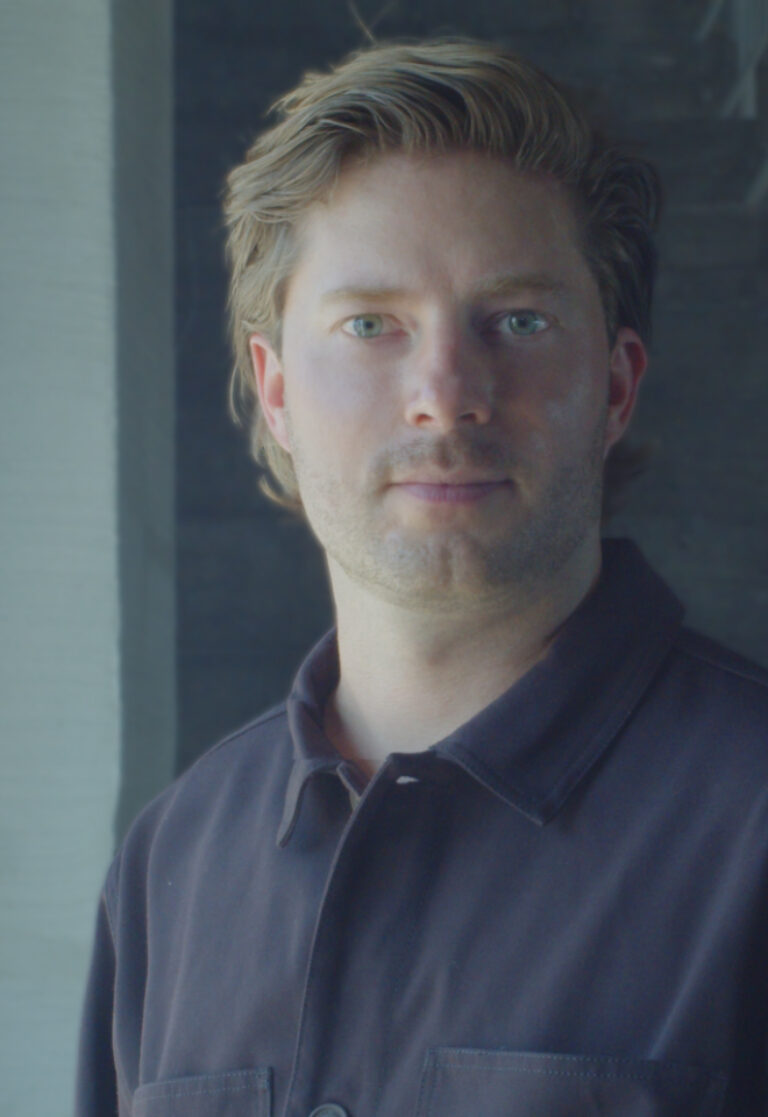
Jonas Janke (DE, 1991) is an architect and partner at bplus.xyz (Berlin). He has a diverse background in architecture, was trained as an architectural draughtsman before pursuing his studies in Hamburg, Stockholm, and Berlin. He gained valuable experience as a tutor and assistant in various departments including design & typologies, building construction, and structural design. He was part of the team 2038, the German Pavilion at 17th Venice Architecture Biennale 2021.
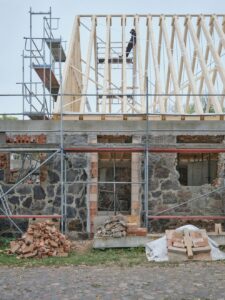
His early teaching experiences include guest studios at the University of Innsbruck (Austria) and Politecnico di Milano (Italy). He is regularly invited to give lectures and guest critiques at universities, cultural institutions, and public institutions. His focus is on new ecological construction materials and methods for adaptive reuse and renovation projects, seeking pragmatic and efficient technical and mechanical solutions that use material and construction thoughtfully.
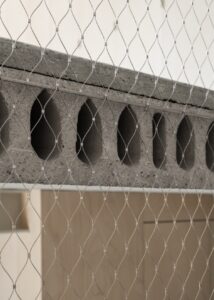
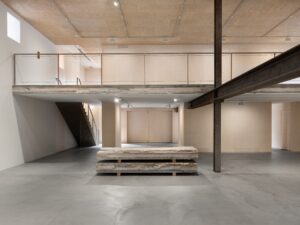
bplus.xyz (b+) is a collaborative architecture practice (led by Arno Brandlhuber, Olaf Grawert, Jonas Janke and Roberta Jurčić) that operates at the intersection of theory and practice, using different media and formats. The practice seeks to engage with the contemporary challenges of our time, particularly those related to the social-ecological transformation of existing buildings, offering economically viable solutions.
b+ understands architecture as an open process, and views buildings as part of larger systems that require a systemic approach. The practice sees the given framework of existing buildings and legislation as an active design tool with the potential for transformation. Thus, b+ celebrates the potential of the existing built environment and aims to reveal and activate the latent potentials within.
b+ emphasizes working with different actors and stakeholders in project development. The practice values their knowledge and expertise and aims to create spaces for exchange and collaboration. b+ seeks to advance a new value system in architecture, one that places greater emphasis on collective responsibility, systemic thinking, and ecologically and economically viable solutions.
The current project in the field of political activism is the European citizens’ initiative HouseEurope! – HouseEurope! wants to create incentives that make renovation the new norm. This will boost the renovation market and give new value to what is already there. The goal is to preserve homes and communities, ensure a fairer and more local building industry, save energy and resources, and preserve our memories and stories.


Tue, May 5, 2026
Cine Club Talks

Carla Finco
Desire on screen and intimacy as a narrative tool
Open to all Master students
This masterclass explores how desire is constructed on screen and how intimacy can become a narrative tool within contemporary cinema. Drawing on her experience at Erika Lust Films, Carla Finco offers a perspective on adult cinema and fiction as territories where direction, narrative, and the construction of desire coexist. A journey through how an idea is born, how an intimate scene is approached, and how to conceptualize eroticism through cinematic language.

Carla Finco is a director and creative producer based in Barcelona. Her work explores the intersection of fiction, desire, and intimacy, viewing the body as a narrative, political, and aesthetic territory. She is part of the creative team at Erika Lust Films, where she develops projects that expand representations of pleasure through a cinematic, contemporary, and conscious lens. Her work lies at the intersection of adult cinema and fiction, with a focus on how to film desire from a more honest, sensitive, and auteur-driven perspective.


Tue, May 5, 2026
Cine Club Talks

Liliana Torres
Writing Contemporary Cinema: Characters and Emotion
Open to all Master students

Liliana Torres was born in Vic in 1980. She graduated with a degree in Film Directing from ESCAC in 2004. Her final thesis film, Anteayer, was selected for that year’s Women’s Short Film Festival as part of a national showcase.
The year she graduated, she received a scholarship for a documentary specialization in Mexico at the Centro de Capacitación Cinematográfica. She would stay there for seven years. These were highly productive years during which she worked extensively as a director, producer, writer, and editor. She directed the short film Quince Años, which won a post-production grant from the Instituto Cinematográfico de México. She edited the videos for the exhibition Eternidad Fugitiva, shown at the Palacio de Bellas Artes in Mexico City, and produced El lenguaje de los machetes, which premiered at the Venice Film Festival’s Critics’ Week.
In late 2012, he directed and produced his first hybrid fiction film, Family Tour, which premiered at the San Sebastián Film Festival in the Zabaltegui Section.
During this time, he supplemented his academic training by completing a Master’s degree in Counseling.
In 2018, he released the documentary Hayati, co-directed with Sofía Escudé.
In 2020, he continued his education with the Expert Course – Advances in Leadership at the University of Barcelona and a Master’s Degree in Self-Leadership and Group Facilitation.
In 2021, ¿Qué hicimos mal? (What Did We Do Wrong?), his second hybrid fiction film, premiered. It was an Official Selection at the Seville Film Festival and the Tallinn Film Festival, among others.
From 2022 to 2025, she was part of the teaching staff at the University of Barcelona as a group observer and feedback coordinator.
Also since 2022, she has been leading the Delta Workshop in collaboration with Fora de Quadre, an organization dedicated to social transformation through video; the workshop focuses on bringing together radically different people through storytelling.
In 2024, she premiered Mamífera. The film had its world premiere at the South by Southwest festival.
In 2025, she co-directed the series ESA NOCHE for Netflix, which made an impressive debut by becoming the most-watched production in Spain during its premiere and ranking as one of the most-watched series worldwide, particularly in countries such as Argentina, Brazil, and Mexico, among others.


Wed, Apr 29, 2026
Masters’ Talks
7.30 pm — Event at DHub
Open to the public

India Mahdavi
Typologies of Intuition, a conversation with Omar Sosa
Typologies of Intuition, a conversation with Omar Sosa
India Mahdavi presents a conversation exploring a practice shaped by an attentive reading of place and experience. From the vernacular minimalism of Siwa to her reinterpretation of Villa Medici, her work reflects an ongoing dialogue between past and present, where each project emerges from its context. Intuition guides this process as a flexible, human way of thinking beyond fixed rules. In Paris, this approach extends into an ecosystem of spaces that brings the studio into the street, fostering exchange, accessibility, and new forms of engagement with a wider creative community.
India Mahdavi
Color defines her work. Ornament is her language. Form is her grammar.
India Mahdavi creates environments that live, breathe, and delight —spaces in constant metamorphosis, shaped by light, mood, and memory. Based in Paris, and of Iranian and Egyptian heritage, raised across continents, she embodies a polyglot and polychrome sensibility: a synthesis of cultures and histories distilled into spaces, objects, and experiences that leave a lasting impression on the senses. Her practice spans interiors, furniture, scenography, and exhibitions, combining rigor and joy. From the Bishop stool to Sketch in London and Bar Nina in Milan, each project engages with its context and culture.
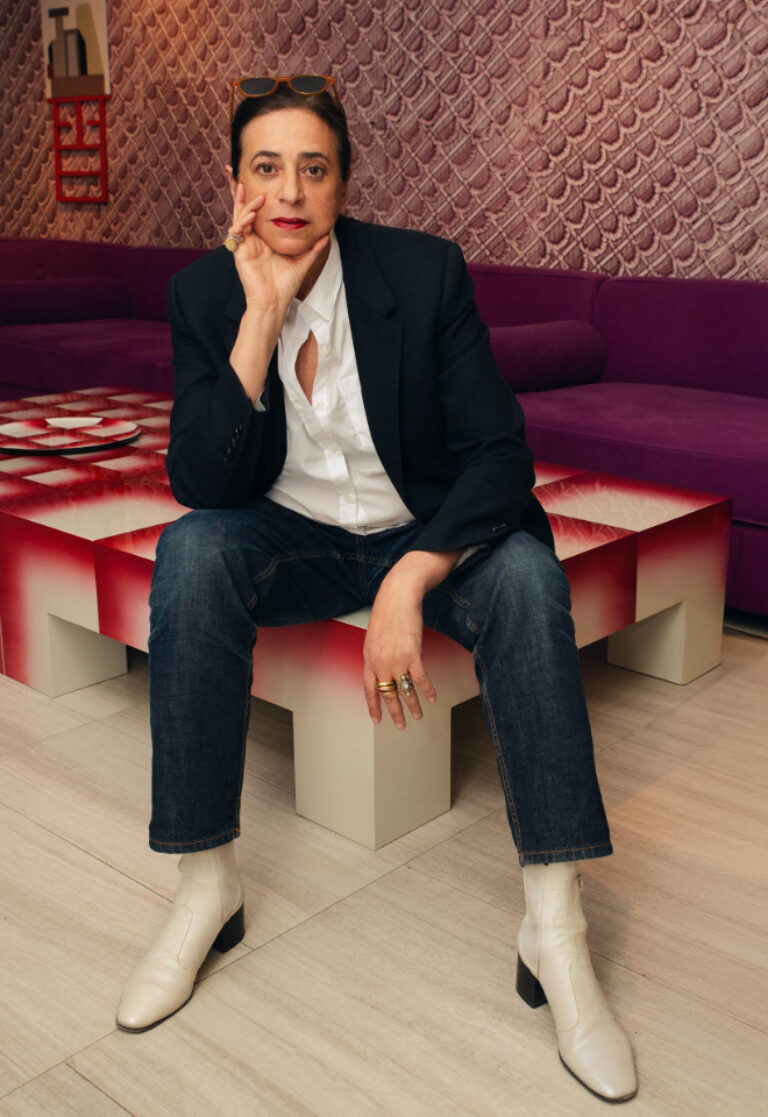
© Laura Friedli
Studio India Mahdavi is a Paris-based multidisciplinary practice working across interiors, furniture, exhibitions, and scenography. Small, nimble, and collaborative, the studio brings together architects, designers, and artisans in constant dialogue. Its ecosystem —showrooms, Project Room, and Petits Objets— acts as a laboratory for ideas and experimentation. Each project engages with its context, culture, and moment, developing environments that are sensorial, expressive, and alive. Through collaborations with leading makers, the studio extends its vision across disciplines, creating spaces and objects that spark joy and shared experience.



Thu, Mar 19 — Thu, Apr 9, 2026
Seminar

Almudena Blasco
Narrative Murals: Steps in the Medieval World Toward Graphic Storytelling
For MINV students only
The aim of this seminar is to offer students a perspective on visual narrative discourse from the Middle Ages through the reading of walls, textiles, and graffiti produced in the medieval world between the 6th and the 15th centuries. These works can today be understood as narrative murals, and even as comics avant la lettre. This approach will allow us to build a long-term historical perspective, establish analogies with contemporary graphic storytelling, and generate inspiration for the development and execution of mural creations using today’s graphic languages.
The seminar Narrative Murals will serve as the theoretical basis for carrying out a collective mural paste-up project that will be produced and exhibited within the framework of the Ilustra Madrid Festival during April and May 2026.
Seminar promoted by the Cátedra de Recerca i Experimentació en Cómic Finestres-Elisava.

Almudena Blasco is a Professor of Medieval Visual Culture. She has been a researcher at the EHESS in Paris and at the CSIC Institute of History, and a Fellow at Harvard (Villa I Tatti, Florence), as well as a professor at the École Polytechnique in Paris. Former director of the journal Medievalia, she has curated numerous exhibitions and works as an art critic in various media outlets.


Tue, Apr 7, 2026
Cine Club Talks

Sandra Tàpia
Producing Cinema: From Creative Vision to Reality
Open to all Master students
Linked to the final project, this masterclass offers a producer’s perspective on contemporary cinema. Through key projects such as Robot Dreams and As Bestas, Sandra Tàpia shares insights into supporting creative vision and managing production challenges.
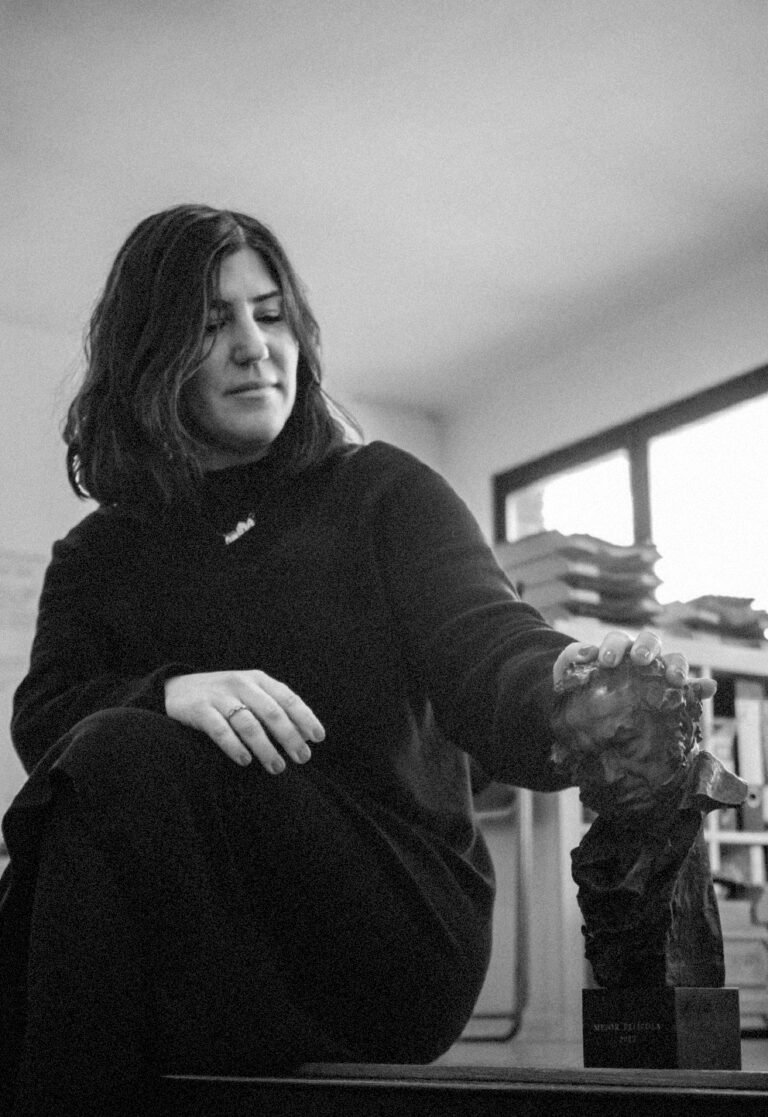
Sandra Tàpia is a film producer with a strong trajectory in independent and international cinema. She has produced award-winning films and works closely with directors throughout all stages of production.


