Events are an integral part of the master programs: from workshops with guests professors to lectures series with relevant practitioners.
upcoming events
Typologies of Intuition, a conversation with Omar Sosa
India Mahdavi presents a conversation exploring a practice shaped by an attentive reading of place and experience. From the vernacular minimalism of Siwa to her reinterpretation of Villa Medici, her work reflects an ongoing dialogue between past and present, where each project emerges from its context. Intuition guides this process as a flexible, human way of thinking beyond fixed rules. In Paris, this approach extends into an ecosystem of spaces that brings the studio into the street, fostering exchange, accessibility, and new forms of engagement with a wider creative community.
India Mahdavi
Color defines her work. Ornament is her language. Form is her grammar.
India Mahdavi creates environments that live, breathe, and delight —spaces in constant metamorphosis, shaped by light, mood, and memory. Based in Paris, and of Iranian and Egyptian heritage, raised across continents, she embodies a polyglot and polychrome sensibility: a synthesis of cultures and histories distilled into spaces, objects, and experiences that leave a lasting impression on the senses. Her practice spans interiors, furniture, scenography, and exhibitions, combining rigor and joy. From the Bishop stool to Sketch in London and Bar Nina in Milan, each project engages with its context and culture.
© Laura Friedli
Studio India Mahdavi is a Paris-based multidisciplinary practice working across interiors, furniture, exhibitions, and scenography. Small, nimble, and collaborative, the studio brings together architects, designers, and artisans in constant dialogue. Its ecosystem —showrooms, Project Room, and Petits Objets— acts as a laboratory for ideas and experimentation. Each project engages with its context, culture, and moment, developing environments that are sensorial, expressive, and alive. Through collaborations with leading makers, the studio extends its vision across disciplines, creating spaces and objects that spark joy and shared experience.
© Valérie Sadoun
© Valérie Sadoun
© Valérie Sadoun
© Rob Whitrow
© Thomas Humery
© François Halard
© Daniele Molajoli
© Victor & Simon
© François Halard
© Thierry Depagne
© Valérie Sadoun
© Valérie Sadoun
© Valérie Sadoun
© Rob Whitrow
© Thomas Humery
© François Halard
© Daniele Molajoli
© Victor & Simon
© François Halard
© Thierry Depagne
Open to all Master students
This masterclass reviews Artur Tort’s main works in fiction cinema, focusing on how light, framing and camera movement shape narrative and emotional atmosphere.
Artur Tort is a cinematographer with extensive experience in film and documentary. His work is characterized by an expressive use of light and close collaboration with directors.
Open to all Master students
This masterclass revisits Clara Roquet’s key works in contemporary cinema, focusing on screenwriting processes, character construction and emotional truth.
Clara Roquet is a screenwriter and director whose work explores relationships, identity and emotional nuance, and has received international recognition
Love me one time, two times … x times !
The lecture is not a conventional showcase of selected projects from our daily practice, but rather aims to provide a broader insight into the network of actors in which b+ (bplus.xyz) operates, how we understand the contemporary way of an architectural practice and scope of work of an architect, and how we approach our projects—in short: who b+ is and how we work, what our values are, and what our understanding of our duties and responsibilities as architects is.
Jonas Janke (DE, 1991) is an architect and partner at bplus.xyz (Berlin). He has a diverse background in architecture, was trained as an architectural draughtsman before pursuing his studies in Hamburg, Stockholm, and Berlin. He gained valuable experience as a tutor and assistant in various departments including design & typologies, building construction, and structural design. He was part of the team 2038, the German Pavilion at 17th Venice Architecture Biennale 2021.
His early teaching experiences include guest studios at the University of Innsbruck (Austria) and Politecnico di Milano (Italy). He is regularly invited to give lectures and guest critiques at universities, cultural institutions, and public institutions. His focus is on new ecological construction materials and methods for adaptive reuse and renovation projects, seeking pragmatic and efficient technical and mechanical solutions that use material and construction thoughtfully.
bplus.xyz (b+) is a collaborative architecture practice (led by Arno Brandlhuber, Olaf Grawert, Jonas Janke and Roberta Jurčić) that operates at the intersection of theory and practice, using different media and formats. The practice seeks to engage with the contemporary challenges of our time, particularly those related to the social-ecological transformation of existing buildings, offering economically viable solutions.
b+ understands architecture as an open process, and views buildings as part of larger systems that require a systemic approach. The practice sees the given framework of existing buildings and legislation as an active design tool with the potential for transformation. Thus, b+ celebrates the potential of the existing built environment and aims to reveal and activate the latent potentials within.
b+ emphasizes working with different actors and stakeholders in project development. The practice values their knowledge and expertise and aims to create spaces for exchange and collaboration. b+ seeks to advance a new value system in architecture, one that places greater emphasis on collective responsibility, systemic thinking, and ecologically and economically viable solutions.
The current project in the field of political activism is the European citizens’ initiative HouseEurope! – HouseEurope! wants to create incentives that make renovation the new norm. This will boost the renovation market and give new value to what is already there. The goal is to preserve homes and communities, ensure a fairer and more local building industry, save energy and resources, and preserve our memories and stories.
past events
Open to all Master’s students
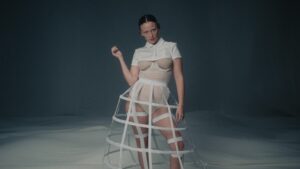
Linked to the music video project, this masterclass revisits Pablo Maestres’ most relevant works in this field. The session explores the music video as a space for experimentation, where concept, rhythm and visual language converge to create expressive and unconventional audiovisual narratives.
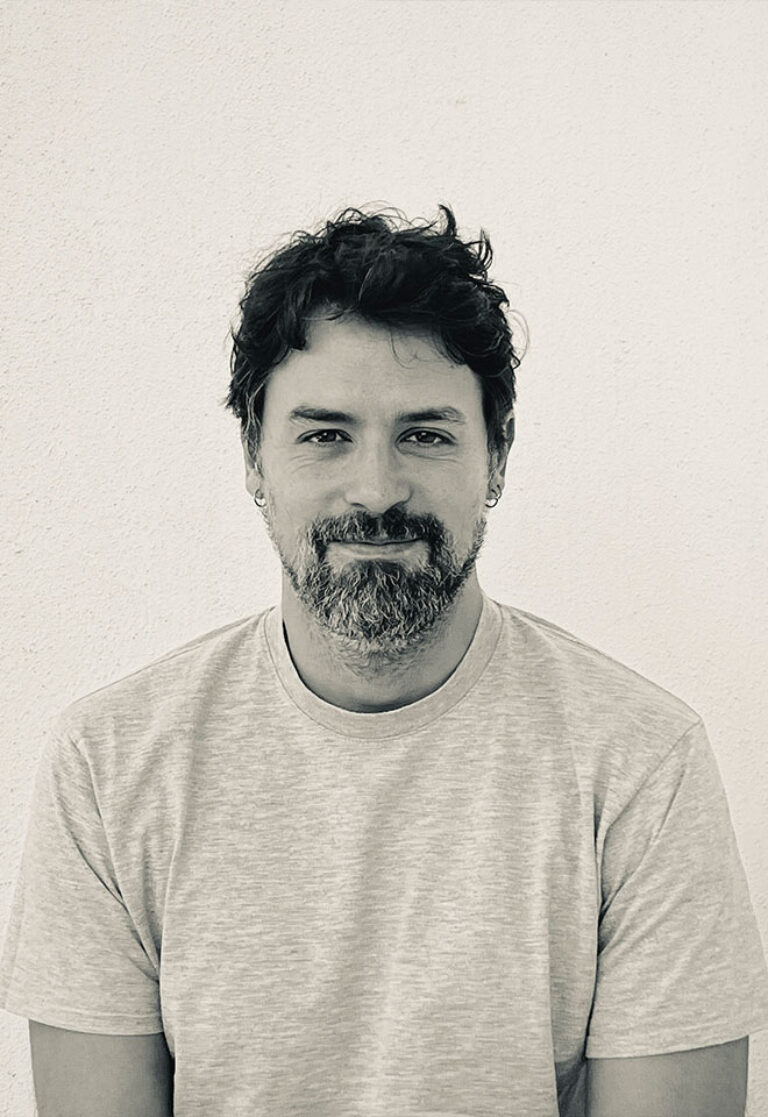
Pablo Maestres is an artist, filmmaker and researcher whose practice moves between audiovisual creation, experimental cinema and music-related projects, questioning narrative conventions and exploring new forms of visual expression.
Open to all Master’s students
This masterclass reviews Salvador Sunyer’s main projects in the field of music videos, focusing on the creative decisions that shape concept, rhythm and tone. The session offers insights into directing processes and narrative construction within short-form audiovisual formats.

Salvador Sunyer is a filmmaker and cultural professional with a background in cinema, performing arts and audiovisual education. His work explores narrative experimentation and the relationship between form and meaning.
Open to all Master’s students
An exploration of creative processes & custom workflows using visual algorithms
The workshop presents Hamill Industries’ experimental approach to visual creation, moving beyond purely digital tools toward self-built devices, practical effects, and hands-on experimentation. Drawing from everyday materials, natural observation, and the dialogue between analogue and digital technologies, their practice spans diverse tools such as 1980s consoles, oscilloscopes, pigments, light, and artificial intelligence. Through case studies and behind-the-scenes documentation, the seminar reveals an open, trial-and-error methodology rooted in an artisanal mindset and focused on building custom tools and processes.
With a strong emphasis on recent AI-based work, the seminar invites participants to treat generative AI as a flexible creative engine rather than a black box. Using open-source platforms like ComfyUI and self-constructed datasets, participants explore the creation of a “visual atlas of impossible bodies,” seeking beauty in error and deviation from standard aesthetics. The goal is to foster creative agency, DIY learning, and personal aesthetic exploration at the intersection of the real and the algorithmic.
Hamill Industries (the artistic duo of Pablo Barquin and Anna Diaz) craft films, installations, and stage productions. With the physical world as inspiration, not only the virtual sphere is re-imagined, but so is reality. Straddling the line between inventors and illusionists, their projects are always highly sensory pieces, regardless of the final medium. Their work explores the expanded visual, committed to questioning and blurring boundaries between digital and tangible realms. Transmedia flexibility is facilitated by extensive workshop research, developing state-of-the-art tools. Their pioneering vision around the use of technology earned the trust of collaborators and institutions, including the San Francisco Ballet (with Tamara Rojo) Floating Points, CCCB or Caixaforum among many others.
Open to all Master’s students
Crafting Personal Narratives through AI and Sound
Inspired by Donna Haraway’s A Cyborg Manifesto, this workshop explores the intersection of human creativity and artificial intelligence through inclusive music-making. Participants use generative music AI to transform personal text prompts and lyrics into complete songs, without needing musical experience. The process emphasizes self-expression, identity, and storytelling. The experience extends into visual creation, as participants design simple animated posters or videos that reflect the themes, emotions, and keywords of their AI-generated songs.
Tereza Ruller (she/her) identifies as a mother, a communication designer, and an educator. Her studio, The Rodina, explores the spatial and interactive possibilities of virtual and hybrid environments as spaces for new thoughts and aesthetics that emerge from the intersection of culture and technology.
Through her independent practice and PhDArts research at Leiden University, she examines performative and critical approaches to communication design, emphasizing playfulness, participation, and relationality. By addressing ecological and social crises—she seeks to develop collective shifts in perspective.
Ruller teaches as Professor of Digital Communication Design at HfG Karlsruhe and as a Critical Narratives tutor at Design Academy Eindhoven, nurturing contemporary design practices that encourage thinking-through-making and explore ways to engage with technology, society, and the environment.
Open to all Master’s students
How to Build Small-scale Autonomous Power Systems
This workshop introduces students to designing and building small-scale, autonomous renewable energy systems and devices that run on them. It focuses on hands-on skills such as constructing solar power installations, creating solar-powered heating appliances, and modifying commercial products to operate on low-voltage solar electricity. A key principle is avoiding batteries, which are often the least sustainable part of energy systems, by designing appliances and power setups that can function directly with variable solar input.
Beyond technical skills, the workshop promotes a bottom-up approach to renewable energy design. Instead of scaling renewable systems to support energy-intensive, fossil-fuel-based lifestyles, students learn to align energy demand with locally available and intermittent power sources. This mindset emphasizes designing within limits and engages with broader issues such as climate change, energy resilience and security, consumerism, e-waste, the right to repair, and circular, sustainable design practices.
Kris De Decker is the author of Low-tech Magazine, which challenges the idea that every problem requires a high-tech solution. Since 2018, the magazine runs on a solar-powered server and has been in print since 2019. He has published research on energy demand at Lancaster University and co-founded Human Power Plant, exploring human energy use. Since 2016, he has collaborated on designing objects inspired by the past to guide technology toward more sustainable directions.
Open to all Master’s students
Collective Bookmaking Through Dialogue, Connection, and Risograph Printing
Bound Together is an interactive, dialog-based workshop that uses conversation and Risograph bookmaking as tools for connection, reflection, and collective meaning-making. Created in response to transactional modes of communication, it invites participants to slow down, listen deeply, and engage one another as whole people rather than roles or titles. Through paired dialogue and hands-on making, the workshop emphasizes presence, care, and shared experience.
Grounded in psychologist Arthur Aron’s research on intimacy and informed by dialogical art practices and thinkers such as David Bohm and James Baldwin, the workshop combines structured questions with collage, Risograph printing, and binding. Participants print pages reflecting their conversations and assemble them into a collaborative book. Rather than prioritizing polish or productivity, Bound Together values experimentation, attentive listening, and the radical act of making together.
Elaine Lopez is a Cuban American designer, researcher, and educator whose work uses print, self-publishing, and participatory workshops to explore cultural identity, memory, diaspora, and U.S.–Cuba relations. Centered on collaboration and pedagogy, she frames publishing as a political, relational act. She is Assistant Professor of Communication Design at Parsons and runs LoPress Press, collaborating with institutions and exhibiting, lecturing, and leading workshops internationally.