
Looking for George
Kbr Flama’25
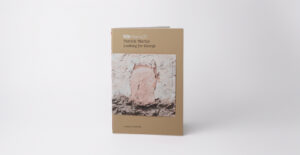
Looking for George
Master's Thesis
- MPhD 24
Looking for George is a project which documents and reflects upon the living nature of collective cultural memory. It traces the origins of the myth of St. George (St. Jordi) in Catalonia to the town of Montblanc, Tarragona, where the Catalan version of the tale is said to have taken place. Using photography, it creates a labyrinth of fragmented stories and symbols imbued with a sense of history, where myth lingers just below the surface.
It is a reflection upon the complex, mysterious and at times absurd ways in which narratives about the past are constructed to form part of national consciousness. Treading lightly between nostalgia for and amnesia of the past, it is a reminder of the strength these narratives hold over identity. Looking for George was selected to be part of KBr Fundación MAPFRE’s Flama’25.
In the third century AD, the heathen Roman Emperor Diocletian issued an edict persecuting Christians in the ancient Greek city of Nicomedia. In an act of defiance, a high-ranking imperial official publicly tore it down in protest. This rebellion led to his brutal execution. Yet as Christianity spread throughout the soon to be declining empire, this story of martyrdom echoed around its provinces.
The myth of St. George is one of the most celebrated of these stories. First emerging in the fifth century AD, George was said to have been a Roman soldier who was martyred two centuries prior for not recanting his Christianity. In the seventh century, he was depicted in a Church in Cappadocia as a figure on horseback slaying serpents. It was only during the Crusades of the thirteenth century, when stories of George reached the West, that he took on the contemporary imagery of a knight, wearing a red cross, slaying a dragon.
Without the anchor of contemporary sources, we can only speculate that George’s true identity was that of the man from Nicomedia. However, this has allowed the myth to ripen: for centuries different communities have carved out their own sensational versions of the tale. Undeterred by any doubts in authenticity, these stories have borrowed from ancient traditions and become embedded within popular cultures. They have even helped communities define themselves, with George being adopted as a patron saint by various nations, including England and Catalonia.


‘Sometimes new traditions could be readily grafted on old ones, sometimes they could be devised by borrowing from the well-supplied warehouses of official ritual, symbolism and moral exhortation – religion and princely pomp, symbolism and freemasonry […] For all invented traditions, so far as possible, use history as a legitimator of action and cement of group cohesion.’
— Eric Hobsbawm, The Invention of Tradition (1983)


‘Modern nostalgia is paradoxical in the sense that the universality of longing can make us more empathetic toward fellow humans, yet the moment we try to repair “longing” with a particular “belonging”—the apprehension of loss with a rediscovery of identity and especially of a national community and a unique and pure homeland—we often part ways and put an end to mutual understanding. Álgos (longing) is what we share, yet nóstos (the return home) is what divides us.’
— Svetlana Boym, The Future of Nostalgia (2001)


‘I sat upon the shore
Fishing, with the arid plain behind me
Shall I at least set my lands in order?
London Bridge is falling down falling down falling down
Poi s’ascose nel foco che gli affina
Quando fiam uti chelidon—O swallow swallow
Le Prince d’Aquitaine à la tour abolie
These fragments I have shored against my ruins
Why then Ile fit you. Hieronymo’s mad againe.
Datta. Dayadhvam. Damyata.
Shantih shantih shantih’
— T. S. Eliot – The Wasteland (1922)
author/s